
Restricted and Repetitive Behaviors in autism: a complex piece of the puzzle. RRBs cover a broad range of motoric behaviors, fixed interests and repetitive routines, but also include sensory seeking. Although these behaviors can have a degree of self-regulation or adaptive purpose for some individuals, many can pose difficulties for learning, routines and social interaction.
Restricted & Repetitive Behaviors in Autism
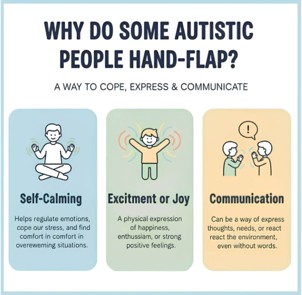
1. Repetitive Motor Movements: Children and adults with autism may also display stereotypic behavior on their bodies such as rocking back and forth, rocking on knees or hand flapping, sometimes termed ‘stimming’. These behaviors have often been considered compensatory or self-regulatory (helping to manage an overwhelming sensory environment).
2. Rigid Routines: A preference for predictable routines and structure may be prominent in the behavior of many children with autism. Such a preference might involve specific foods at meal times, the same bedtime routine or the same way to and from school. The desire for the same routine may be triggered by anxiety and distress when such routine is disrupted, yet they help many to feel stable and at peace.
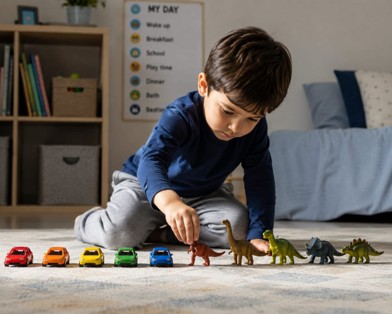
3. Fixated Interests: Children and adults with autism can display an interest of varying severity in certain things or topics. An example of a fixated interest in children with autism might be to provide facts or figures of a particular type of bus before engaging in new environments. Interests for children with autism span many types, such as a favorite cartoon, specific model of toy train or different dinosaurs, yet these interests can dominate a child’s attention and so impede progress in other areas of learning, especially social skills.

4. Compulsions and Rituals: In some instances, children with autism can present with extremely ritualistic behaviors such as saying words or phrases in an order or manner dictated by internal rules, the need to have objects arranged in a very specific order, or the requirement to count something over and over. Like the rigidity of routines mentioned above, compulsions in children with autism often serve a need to reduce anxiety or to ensure a sense of order. However, they can be detrimental to social engagement and the learning process.
Visual Idea: Child lining up a row of stuffed animals with similar characteristics in order of size.
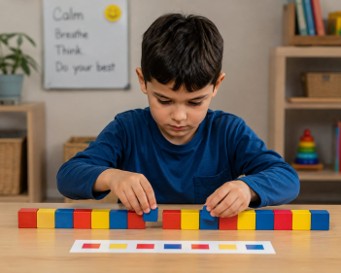
5. Sensory-Driven Behaviors: Individuals with autism display unique preferences or aversion to specific types and intensities of sensory stimulation. Individuals may seek certain sensory input such as a particular sound or touch or attempt to lessen overwhelming input by covering ears and eyes or wearing sunglasses or earplugs. Some may try to minimize the overwhelming sensory environment through autistic stereotypic behaviors or the pursuit of tactile or auditory sensory input.
6. Self-Injurious Behaviors: Repetitive behaviors can unfortunately be hazardous and harmful to individuals such as head-banging, scratching or bit-biting. These clearly are the result of extreme distress and are indicators that professional intervention is warranted as soon as possible.
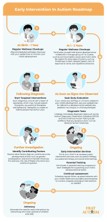
7. Impact on Daily Life: While RRBs provide comfort and order, they can prevent flexibility and opportunities for social interaction and learning tasks, as well as increase the tendency towards a rigid perspective. These behaviors can significantly hinder academic and life functioning. Working with RRBs to improve a child’s level of control and self regulation involves incorporating OT techniques and behavior modification strategies with support to enable social interactions and inclusive education environments.

Conclusion
RRBs include motor movements, fixed interests and ritualistic behavior and need to be viewed in terms of their potential function (self-regulation or learning support) as much as for the disruption they may cause.