
I Think My Child May Have Autism or ADHD but I’m Not Sure. How Can I Find Out? What Is Autism? What Are the Symptoms of Autism?
Everyone develops at their own pace. Some parents notice that their child is not like other children the same age. They may not talk or may avoid looking at you, may be hard to play with others, or may be unusually active or inattentive. These observations may lead you to wonder whether your child may have Autism Spectrum Disorder (ASD) or Attention-Deficit/Hyperactivity Disorder (ADHD). It can be confusing and confusing – and even frightening. It is normal to feel uncertain. To make sense of the situation and help your child, it is worth taking the time to learn more about autism and to seek professional advice.
What Is Autism?
Autism, also known as Autism Spectrum Disorder (ASD), is a developmental condition that affects communication, learning, interaction with others and reaction to the world. It is ‘spectrum’ because all children with Autism are different. Some children may have mild symptoms and few support needs, but some children may need lifelong support with communication, learning and daily living. Autism is not a disease or a mental illness, nor is it ‘kids’ fault’. With early diagnosis and appropriate therapies, many children with autism can acquire useful and meaningful life skills and lead fulfilling lives.
How To Know If Your Child Is Autistic or Has ADHD
If you suspect your child may be autistic or have ADHD, observe their behavior over several weeks. See how they communicate with others, play with others, respond to other people, and interact with daily life. Write down behaviors that bother you, including when they occur and how often. Then, make an appointment with your child’s pediatrician and share what you’ve noticed. Your doctor may administer a developmental screening tool or refer your child to a developmental pediatrician, child psychologist, psychiatrist, speech-language pathologist, or occupational therapist. These professionals use standardized tests, interviews, and observations to determine whether a child has autism, ADHD, or some other developmental disorder.
Autism Symptoms
1. Delayed Speech or Language Skills
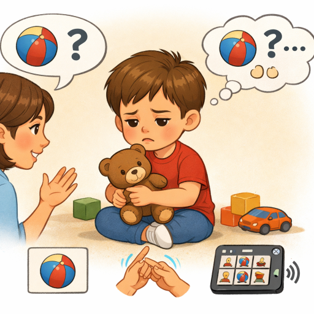
Children who are autistic often have speech and language skills that develop later than their peers. Some may not use meaningful words by the normal age, and others may repeat words and phrases that they hear without understanding their meaning, a phenomenon called echolalia. These children may be unable to ask for help, answer questions, or have basic conversations. Some children communicate with pictures and gestures, or through the use of aids and devices.
2. Problems with Social Interaction
Social Interactions
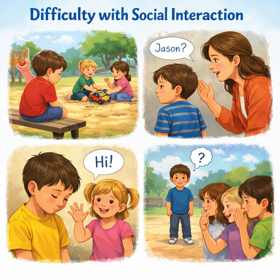
Many children with autism find social interactions difficult. They may not make eye contact, rarely smile back, or respond when someone calls them by name. Some children prefer to play alone rather than with others. Others may be unable to interpret facial expressions, body language or emotions. Maintaining friendships is also difficult because they do not automatically know the social norms.
3. Repetitive Behaviors
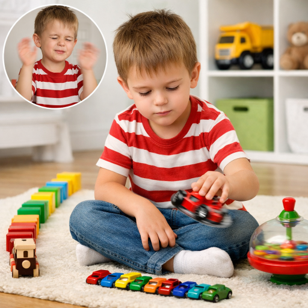
Autism is characterized by repetitive behaviors. A child may stick their hands out and flap them, sway from side to side, spin objects or walk on tiptoes. They may also repeat certain words or sounds over and over. Some children like to organize their toys in an orderly fashion or be rigid about how their day is planned. Any small alteration to a routine, such as a different route home or an altered meal time, can upset a child and cause anxiety.
4. Sensory Sensitivities
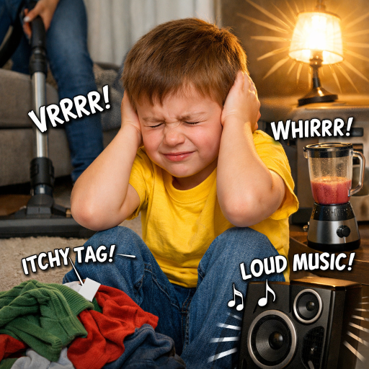
Most children with autism experience sensory differences. They may be extremely sensitive to loud noises, bright light, certain smells, certain clothing textures or certain food textures. For instance, a child may cover their ears when they hear the sound of a vacuum cleaner or they may refuse to wear certain fabrics that feel uncomfortably rough. Some children also require more sensory input and will spin in circles, jump up or down or touch many different objects repeatedly.
5. Strong Interest in Specific Topics
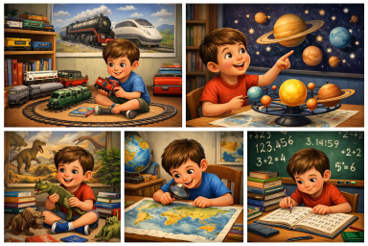
Many autistic children have a strong interest in specific kinds of objects or topics. They will spend long periods of time learning about trains, dinosaurs, planets, numbers, maps, or some other special (theory?) subject. They can recall a great deal of detailed information and will talk about the subjects time and time again. This can be a strength and make them excellent in specialized interests, but can also block the child from other activities and conversations.
6. Struggle with Understanding Emotions
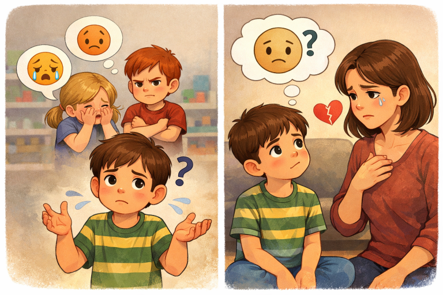
Children with autism often struggle with understanding and expressing their emotions. They may have difficulty understanding if someone is happy, sad, mad or upset by looking at facial expressions or by listening to tone of voice. They may also have difficulty expressing their own emotions in words. This can give them an appearance of insensitivity, though they may feel deeply about others. Over time with social skills training and therapy, children can learn to better understand and express emotions.
Conclusion
Not every child with one or two of these signs has autism and some of the symptoms may also be found in ADHD or other developmental differences. However, if you notice persistent concerns about your child’s communication, behavior or social development, you may want to speak with a qualified healthcare professional for a comprehensive assessment. Early assessment and intervention can significantly enhance communication, learning, independence and overall quality of life, enabling your child to thrive.